
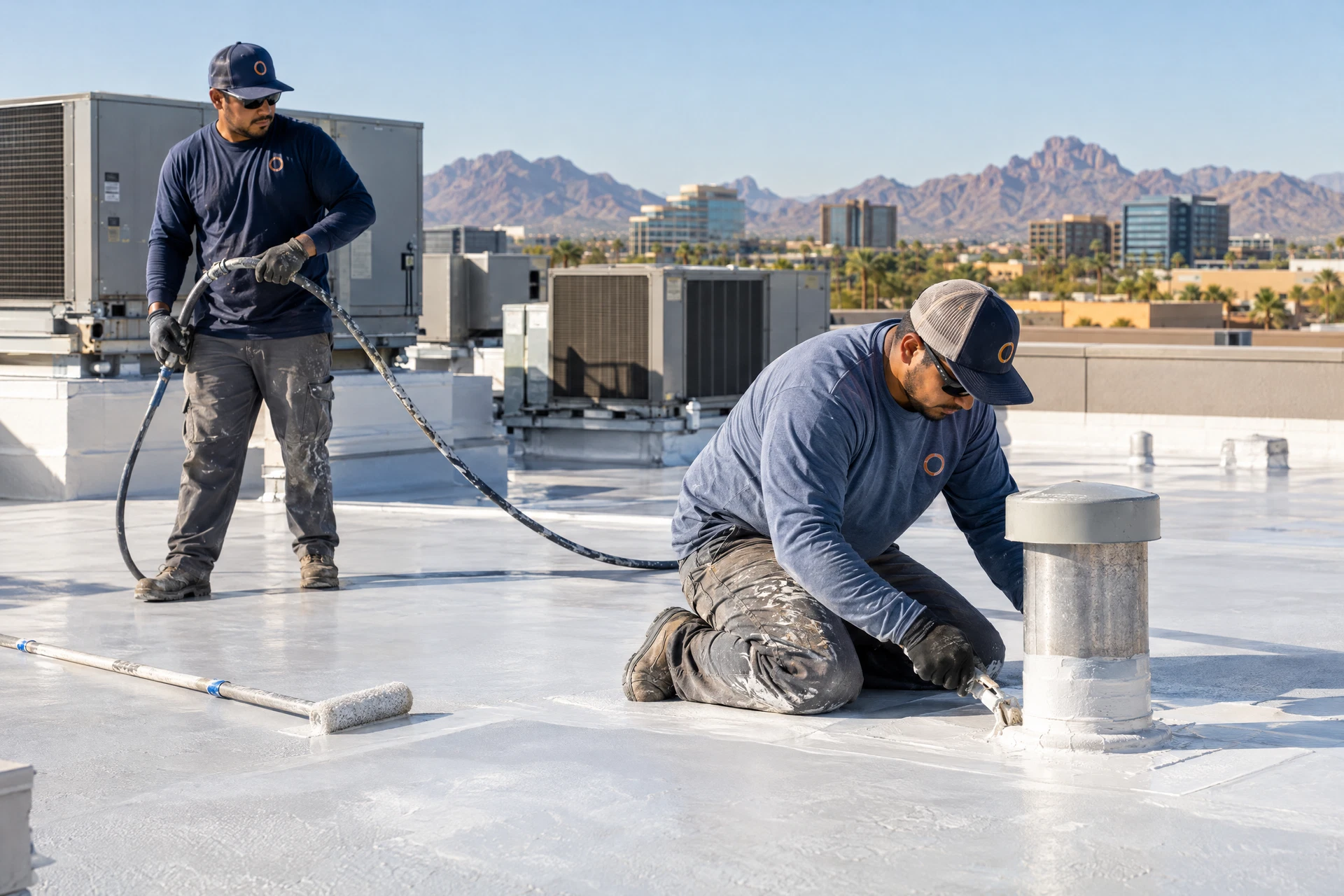
Flat and low-slope roofs depend on drains, scuppers, seams, and carefully sealed transitions. A small opening in one of those areas can lead to a large interior problem.
Why low-slope roofs leak
Low-slope roofs move water slowly. Debris, blocked drains, seams, edge details, pipe openings, and equipment bases can interrupt that path. Water can then collect, work under the roof surface, and show up inside the building somewhere else.
What we inspect
We look at drainage routes, seams, penetrations, rooftop equipment, prior patches, edge metal, and the areas around the reported leak. The goal is to find the likely source, not just cover the most visible symptom.
How standing water changes the scope
Standing water may come from a blocked drain, a low area, roof deflection, or an issue at an edge or scupper. The cause matters. A patch or coating may help only after the drainage and roof condition are understood.
How to prepare
Tell us where the interior leak appears, how long water remains after rain, whether the roof has been patched before, and what equipment sits nearby. This helps decide whether the need is a focused repair, broader restoration, or replacement planning.
How to prepare for the conversation
Send the property address, the visible problem, roof age if known, recent repair notes, safe ground-level photos, access instructions, and the building schedule. You do not need to climb onto the roof to start the conversation.
- 01Record where water appears and what weather occurred.
- 02Review drains, low areas, seams, and nearby transitions.
- 03Choose a repair scope that also supports the roof’s longer-term condition.