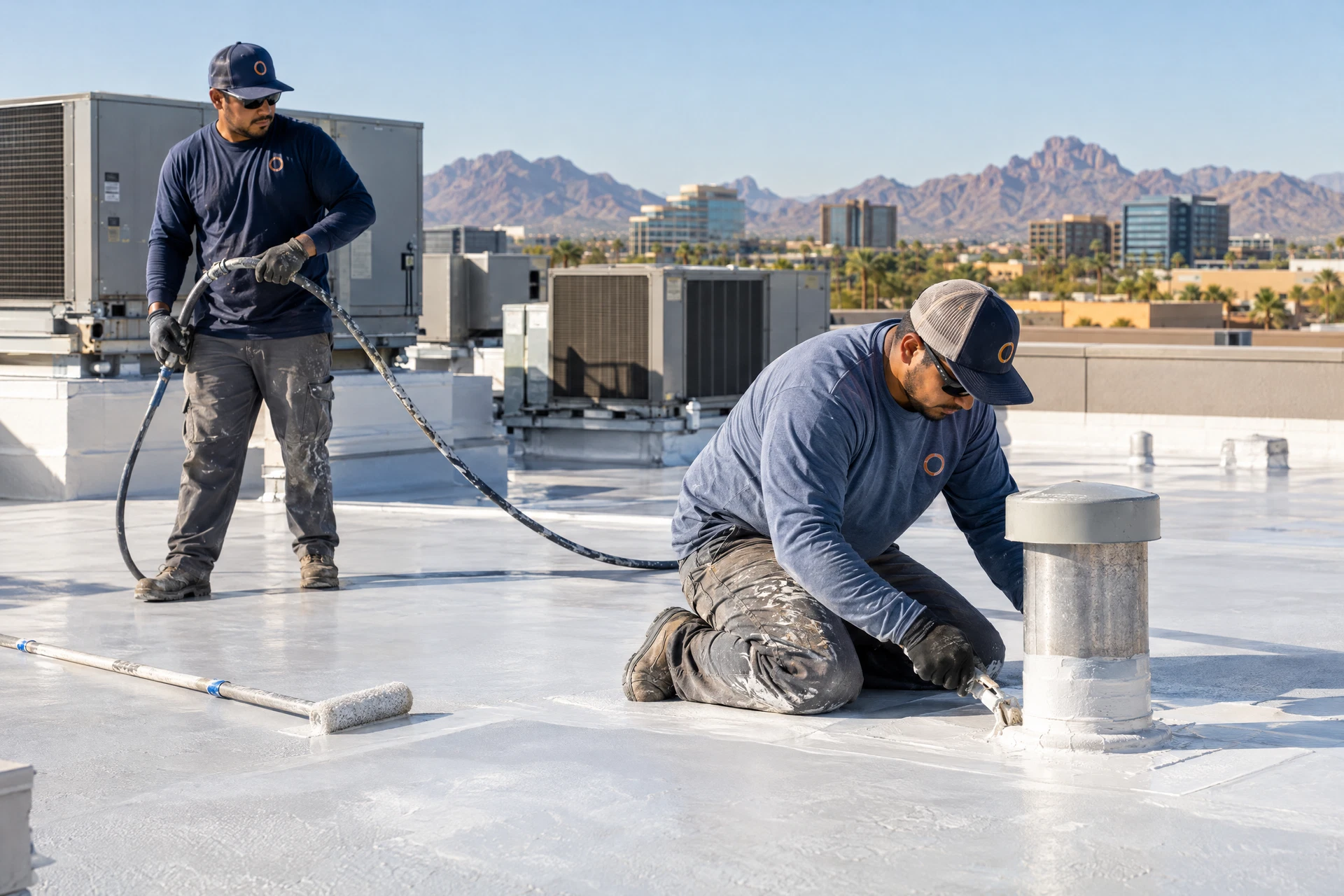
Commercial roof coating can be a practical restoration option when the existing roof is still sound. It is not a paint-over fix. The roof must be dry, stable, clean, and compatible with the coating system.
What commercial roof coating does
A roof coating creates a protective surface over an eligible existing roof. It can help protect a weathered low-slope roof and may delay a full replacement. The result depends on the roof beneath it, the preparation work, the material selected, and the condition of seams, drains, edges, and rooftop details.
What we look at first
We review the roof surface, seams, flashings, drains, pipe openings, equipment bases, edge metal, and past repairs. We also ask where water collects and how people use the roof. Scottsdale sun and monsoon storms put stress on the small details where leaks often begin.
What the scope should include
A useful coating scope states what will be cleaned, repaired, reinforced, and coated. It should also explain access, equipment protection, roof traffic, weather limits, and any conditions that could change the work after inspection. A bright finished surface is the last step, not the whole job.
When coating may not fit
Coating may not be the responsible choice when the roof has widespread wet insulation, unstable materials, major structural concerns, or broad membrane failure. Covering those conditions can hide the problem instead of solving it. An inspection should separate a suitable restoration project from work that needs a different approach.
How to prepare for the conversation
Send the property address, the visible problem, roof age if known, recent repair notes, safe ground-level photos, access instructions, and the building schedule. You do not need to climb onto the roof to start the conversation.
- 01Share the building address, roof age if known, and the problem you are seeing.
- 02Review drainage, roof details, access, and the condition of the existing surface.
- 03Compare repair, coating, maintenance, or replacement options with a clear scope.