Commercial roofs expand and contract as temperatures change. A flexible elastomeric coating may fit a stable, compatible roof when the project also addresses the seams, edges, and transitions that move the most.
What elastomeric means
Elastomeric describes a coating designed to remain flexible after it cures. That flexibility can help a roof system handle normal movement, but it does not repair a failing roof below the coating. Compatibility, surface condition, and detail work remain the deciding factors.
Where problems usually show up
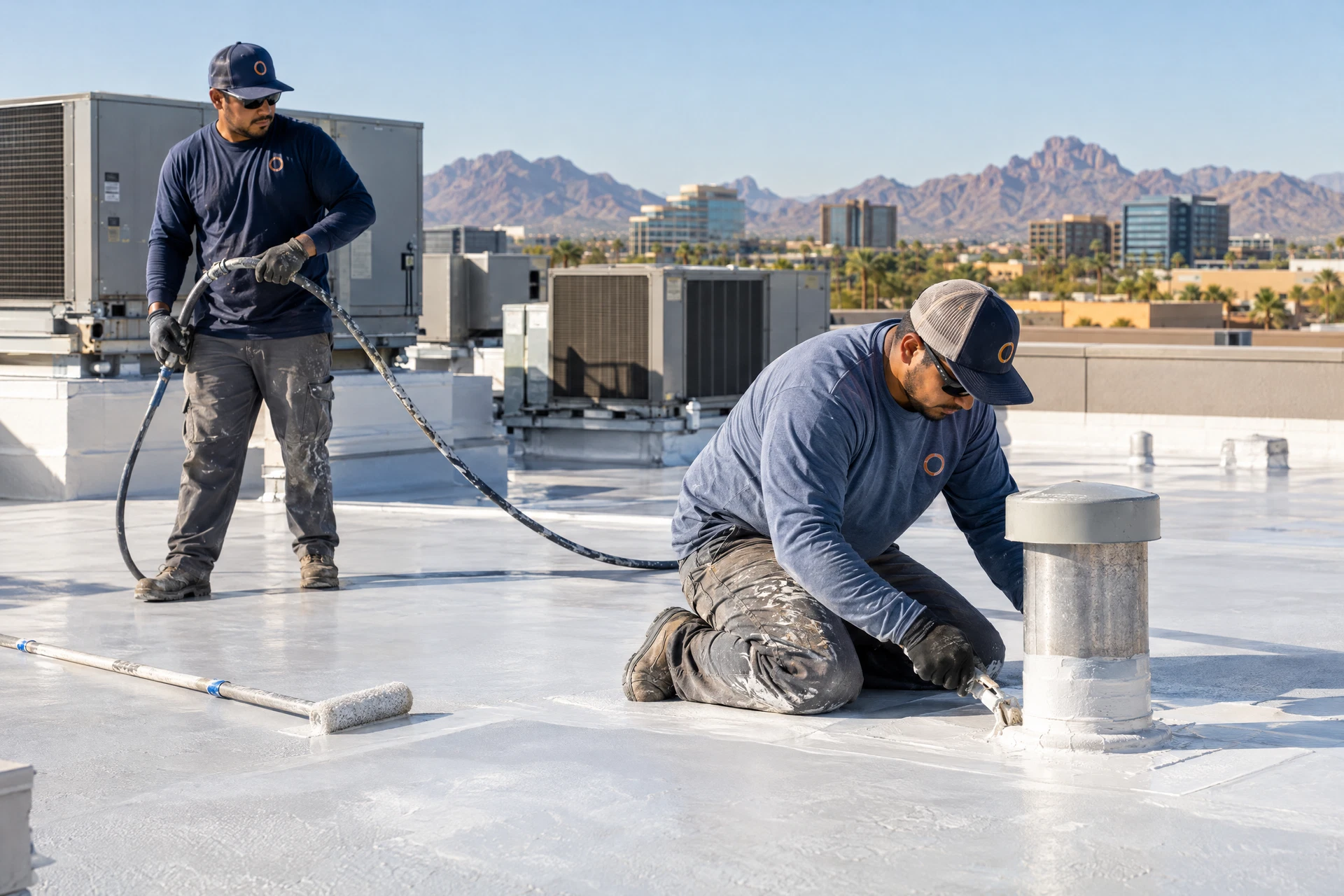
Open roof field areas matter, but leaks often start at seams, pipe openings, equipment curbs, wall transitions, drains, and edge metal. These areas can move, receive traffic, or hold water. A coating scope should identify how each detail will be prepared and reinforced.
What a practical scope includes
The work should spell out cleaning, repairs, detail treatment, coating material, required thickness, access, weather limits, and maintenance expectations. It should be clear about what the coating can protect and what still needs separate repair or replacement.
When to use another option
If the roof contains widespread moisture, loose materials, major structural concerns, or extensive membrane failure, a coating may not be enough. Inspection helps prevent a surface-level answer to a deeper roof problem.
How to prepare for the conversation
Send the property address, the visible problem, roof age if known, recent repair notes, safe ground-level photos, access instructions, and the building schedule. You do not need to climb onto the roof to start the conversation.
- 01Identify roof areas that are stable and details that need repair.
- 02Plan reinforcement where movement and water create the most risk.
- 03Apply the selected system and schedule routine checks after completion.