A commercial roof inspection gives property owners and facility teams information they can use before funding repair, coating, maintenance, or replacement work.
What an inspection covers
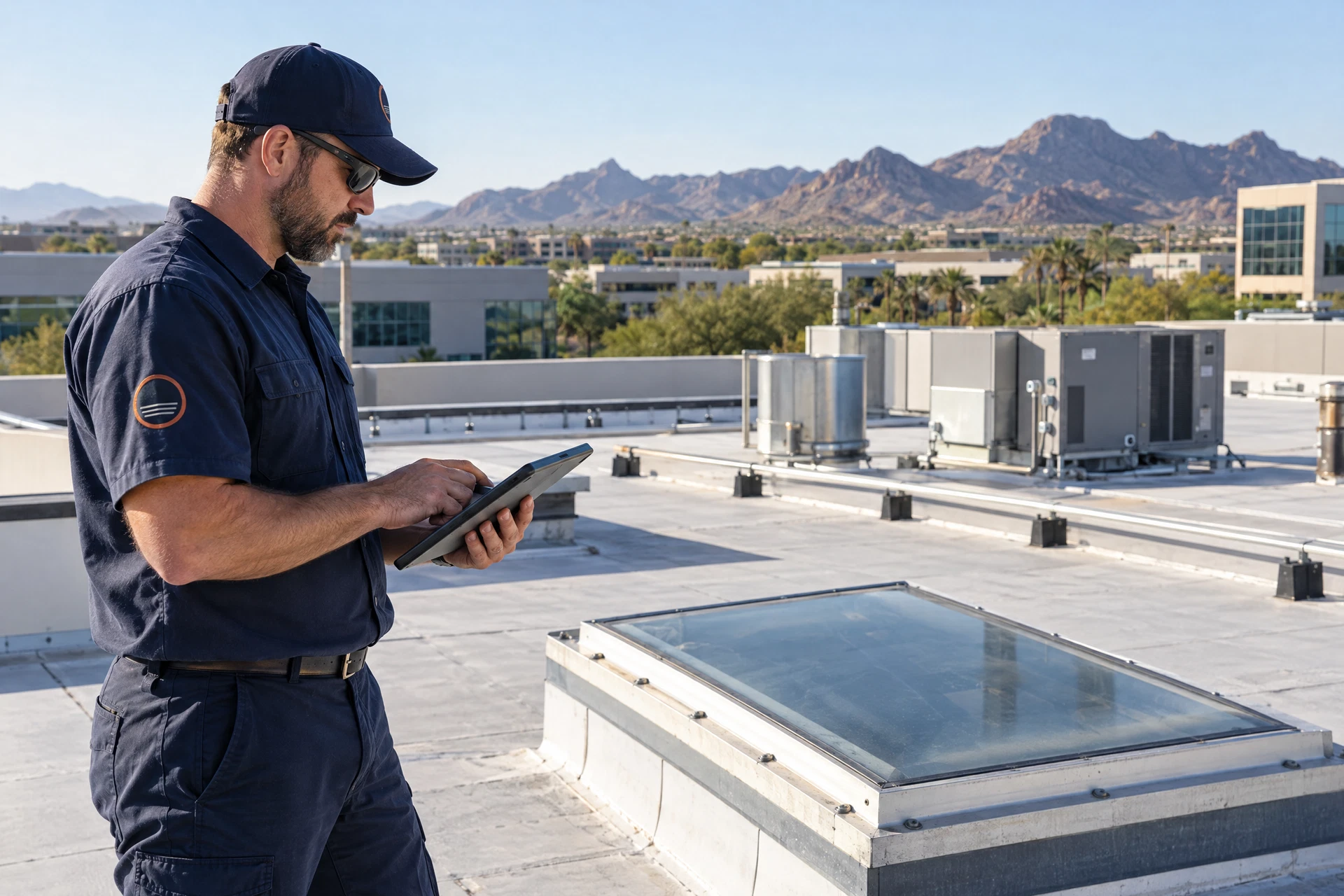
The review can cover accessible roof areas, seams, roof edges, drains, flashing, pipe openings, equipment bases, visible repairs, foot-traffic areas, and signs of water entry. The goal is a plain description of the roof’s current condition.
What the report should answer
A useful report separates immediate concerns from items that can be watched or budgeted. It should help explain where water may be entering, what repairs are needed, whether a coating discussion is reasonable, and what needs more evaluation.
Why an inspection comes before a coating decision
A roof coating works only when the underlying roof is suitable. Inspection looks for moisture, unstable material, failing seams, drainage problems, and compatibility issues that a website form cannot see.
What to have ready
Bring roof age and repair records if you have them, known leak locations, photos taken safely from the ground, building hours, access rules, and any upcoming rooftop work. Those details help connect the roof condition to the way the property operates.
How to prepare for the conversation
Send the property address, the visible problem, roof age if known, recent repair notes, safe ground-level photos, access instructions, and the building schedule. You do not need to climb onto the roof to start the conversation.
- 01Review accessible roof surfaces and perimeter details.
- 02Record conditions with clear notes and photos.
- 03Use the findings to choose repair, maintenance, coating, or further evaluation.