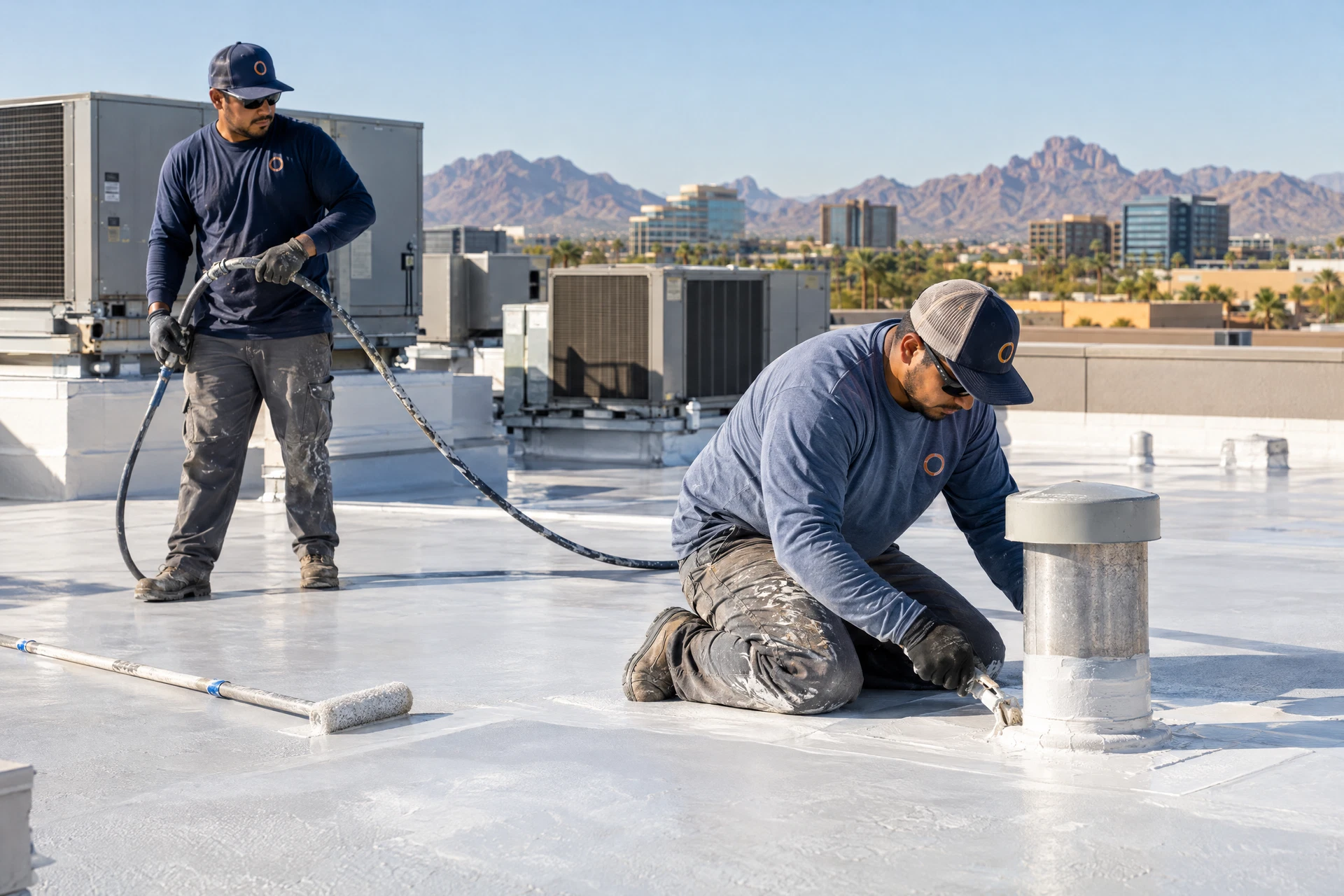
Commercial roof maintenance helps property teams find clogged drains, loose details, traffic damage, and aging repairs before the next storm turns a small issue into an interior leak.
What a maintenance visit checks
A useful visit reviews drains, scuppers, seams, flashing, equipment areas, walk paths, roof edges, and earlier repairs. It also records debris, surface wear, and areas that should be watched before the next weather event.
Why records matter
A roof is easier to manage when the next person can see what changed. Notes and photos from each visit help distinguish a new problem from a recurring one. They also support budget planning when repair, coating, or replacement becomes necessary.
How often to inspect
Many commercial roofs benefit from checks twice a year, after major storms, and after other contractors work on the roof. The right frequency depends on the roof system, rooftop equipment, foot traffic, building use, and manufacturer requirements.
What maintenance cannot replace
Maintenance can identify and address smaller problems early. It does not turn an unsuitable roof into a coating candidate or remove the need for repair when water has reached the roof assembly. Findings should lead to the right next scope.
How to prepare for the conversation
Send the property address, the visible problem, roof age if known, recent repair notes, safe ground-level photos, access instructions, and the building schedule. You do not need to climb onto the roof to start the conversation.
- 01Schedule checks around seasonal weather and building activity.
- 02Clear drainage paths and review recurring leak or traffic areas.
- 03Keep a simple record of observations, repairs, and items to budget.