
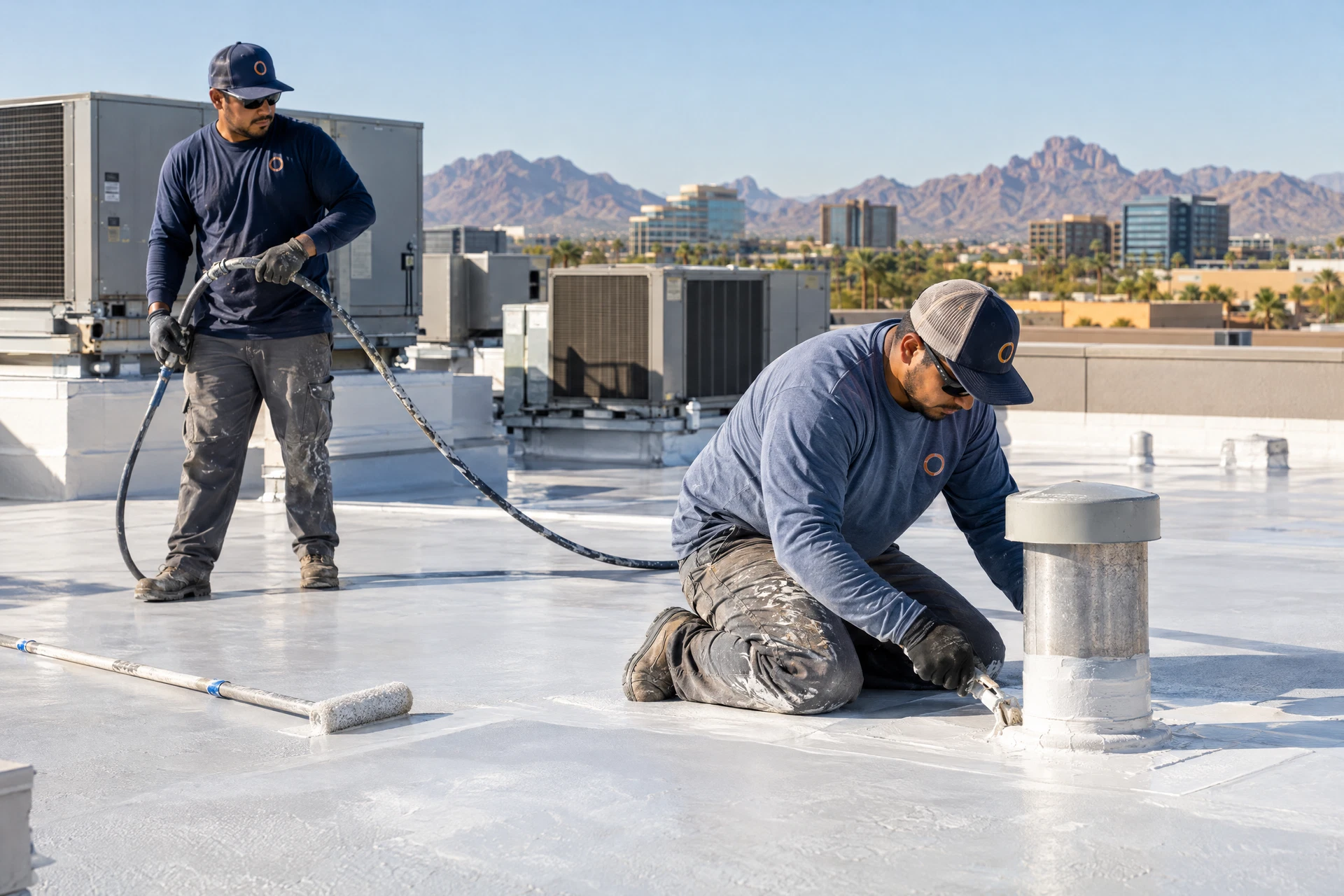
Water can travel under a commercial roof before it reaches the ceiling. The stain inside may be several feet away from the failed seam, flashing, pipe opening, drain, or edge detail.
Start with the water path
A repair begins by connecting the interior symptom to the likely roof condition. Note where water appears, when it happens, whether it follows rain or wind, and whether the area is near rooftop equipment or a past repair. Those details give the inspection a useful starting point.
Common repair areas
Commercial roof repairs often involve seams, flashing, roof edges, drains, scuppers, pipe penetrations, equipment curbs, and patches that have aged or pulled loose. The visible leak is only one clue. The surrounding area needs review so a small failure does not keep returning.
Repair versus larger work
A focused repair may be enough when the rest of the roof remains in good condition. If the roof has many active leaks, widespread surface failure, or wet material below the surface, the next conversation may need to include coating or replacement planning.
What to send before the visit
Share the address, a description of the interior problem, recent weather, safe ground-level photos, roof access instructions, and known repair history. Do not climb onto the roof to collect photos. Safety comes first.
How to prepare for the conversation
Send the property address, the visible problem, roof age if known, recent repair notes, safe ground-level photos, access instructions, and the building schedule. You do not need to climb onto the roof to start the conversation.
- 01Record the leak location and recent weather conditions.
- 02Inspect the likely source and nearby roof details.
- 03Repair the failed area and document the work for future maintenance.